

Mint Condition
This refreshing herb is "mint" to be used in cooking.

Collectors may describe coins as being in “mint condition” (coin factories are called mints). We like to use the term to describe a dish that comes to life when we add this bright and fresh herb to the mix.
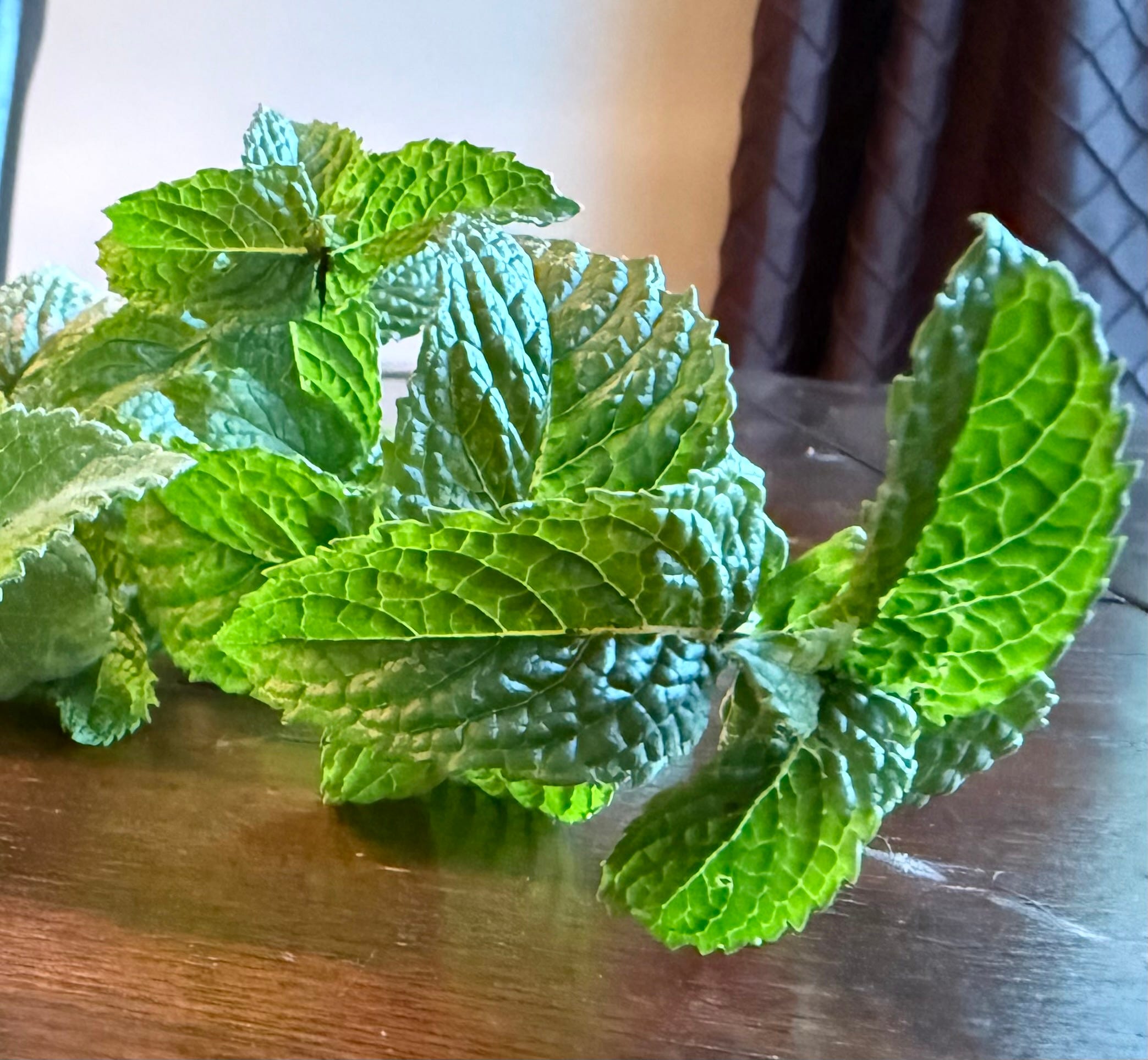
Meet Mint: This Mediterranean native has been used since ancient Roman times, when it was pickled in vinegar. There are hundreds of varieties of mint, but spearmint (Mentha spicata) is the most common variety in cooking. Milder and less pungent than peppermint, spearmint refreshes with an astringent taste that comes on strong and backs off quickly. When mint is cooked, it tastes similar to thyme, which is in the mint family, but is more aromatic, according to cookbook author Jamie Geller.
Popular in Middle Eastern and Moroccan cooking, mint is used in Iran the way cilantro or parsley is used in the U.S., writes Louisa Shafia in “The New Persian Kitchen.”
Mint is integral to tabbouleh, an herb-forward salad we wrote about in July 2025. It’s frequently added to yogurt-dressed sauces and is a key player in herb medleys used to flavor dishes, such as Iranian kuku (similar to a frittata or quiche), herb-based fresh sauces or as a garnish atop grain salads. Sunset magazine suggests pairing it with pomegranate molasses in vinaigrettes, or creating a seasoning blend with toasted sesame and sumac. Mixed with hot green chiles and yogurt, it becomes a delicious chutney cozying next to tandoori chicken in northern India. In Southeast Asia, it enlivens salads, soups and sauces.
Anyone who’s been to a Moroccan restaurant knows mint equals Moroccan tea. It’s considered integral to the country’s lifestyle and a symbol of hospitality. A sweetened blend of green tea and mint is lightheartedly known as “Moroccan whisky,” according to the Planet D blog.
Fun Fact: Have you wondered why servers in Moroccan restaurants hold the teapot of mint tea well above the glass when pouring? It aerates the tea so it’s more flavorful.
Tip: Keep in mind that fresh mint is best used raw or barely cooked. So for minty confections and baked goods, steep and strain the leaves or use mint extract or oil.
Fresh mint is widely available at grocers and farmers’ markets. You’ll find dried mint in well-stocked grocers or your favorite local or online spice shop, or use peppermint tea. Dried and fresh mint are interchangeable in many recipes, though dried has a stronger flavor, so use about use ⅓ dried for the fresh amount. Be sure to smell your dried mint, as it loses its flavor rather quickly.
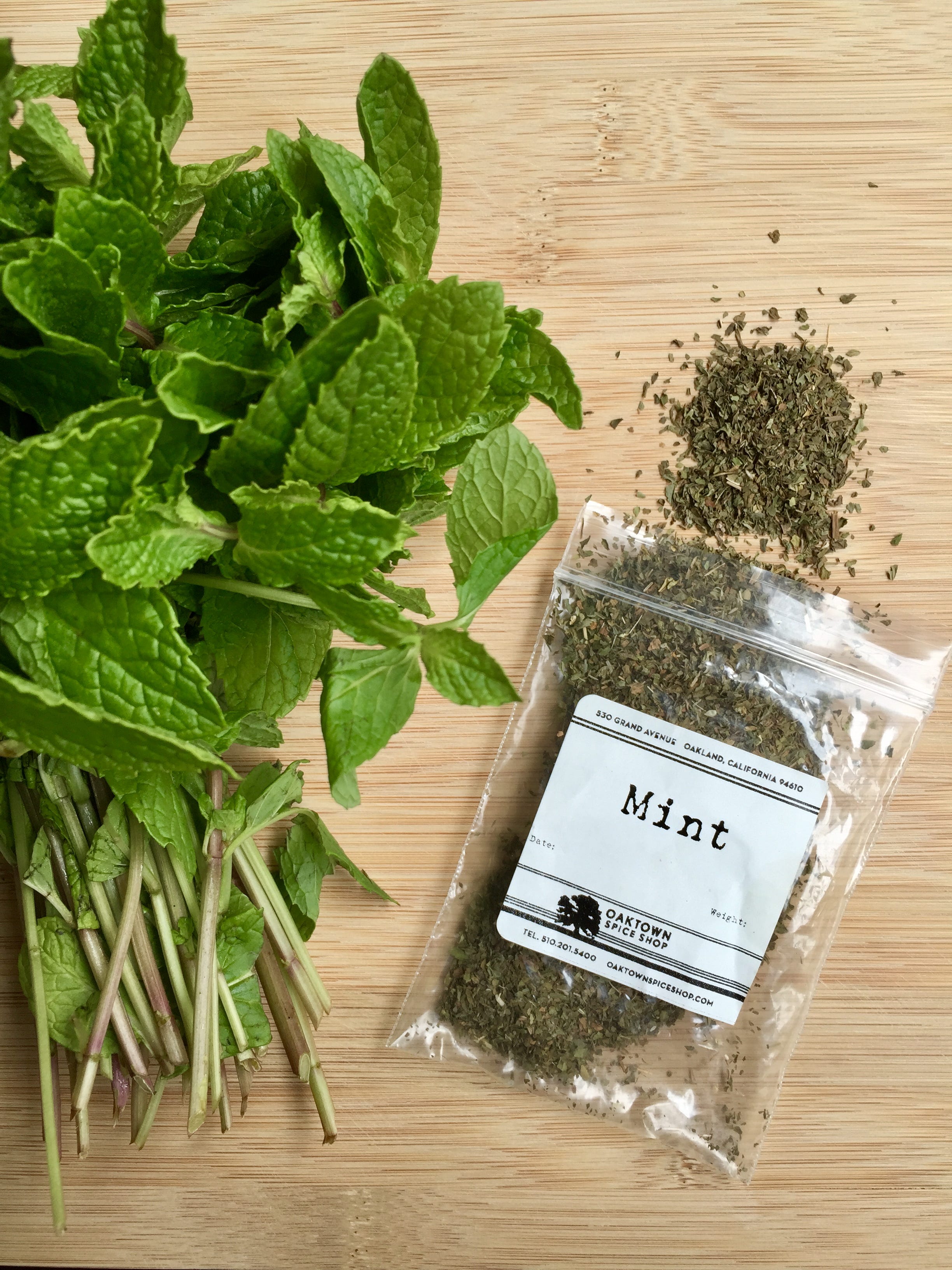
For DIY dried mint: Shafia recommends washing spearmint leaves in cold water and drying them in a salad spinner. Put the herbs on a baking sheet in your oven set on the lowest setting. Stir every 10 minutes to prevent burning. Dry until they’re crackly and store in an airtight container.
To store fresh mint: Refrigerate fresh-cut sprigs as soon as possible; they fade quickly when left out. They keep up to five days wrapped in a barely damp paper towel sealed in a plastic bag. For longer storage, put mint stem-down in a glass with about an inch of water. Cover the top with a plastic bag and rubber band the plastic to the glass to keep the air out. Change the water every couple days.
Tip: If you decide to grow mint in your garden, be sure to do it in a contained pot. Mint is notorious for taking over a garden and sending out shoots that pop up everywhere. (Ask us how we know.)
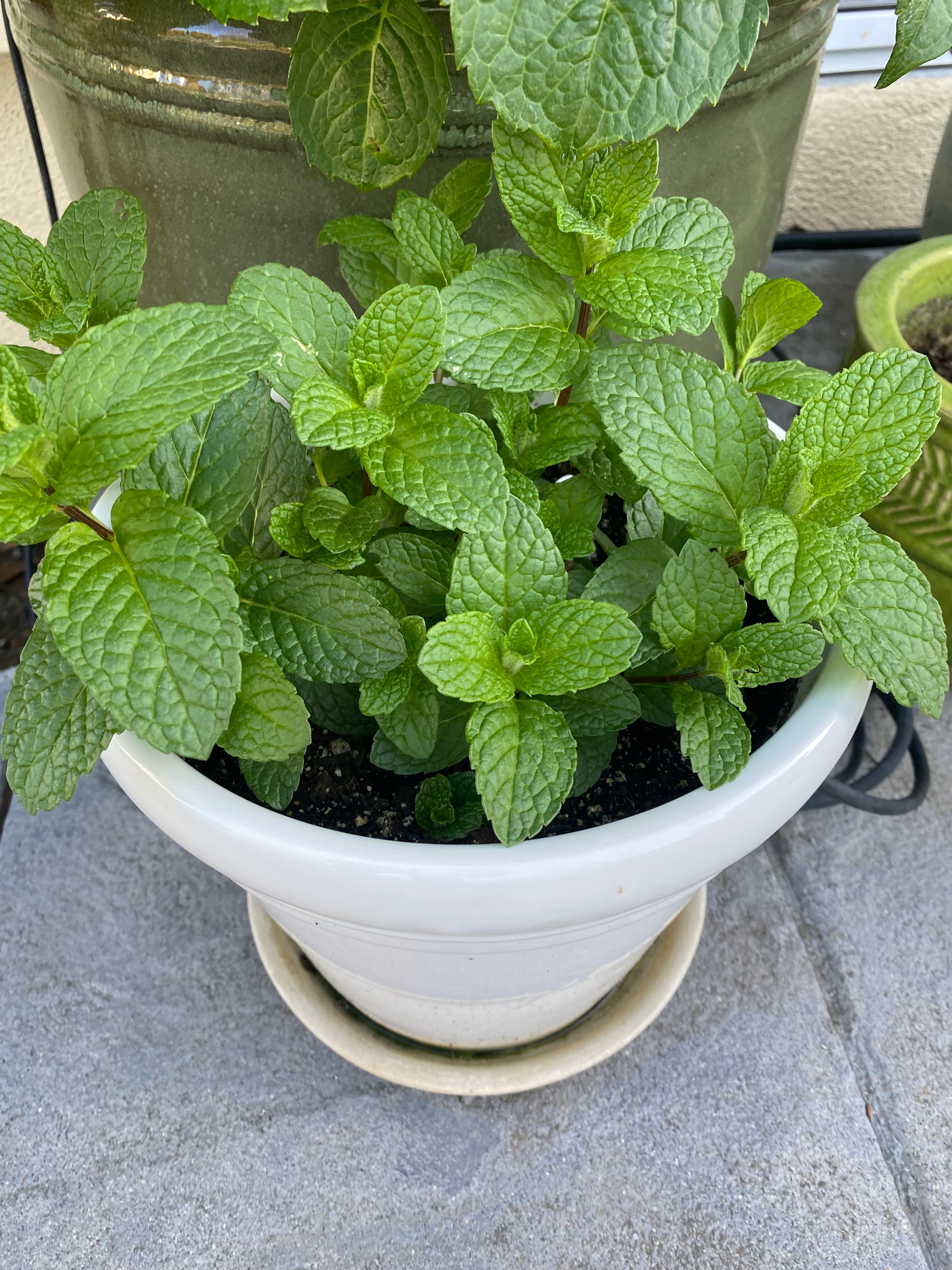
Deep Dive: In early Rome, Pliny recommended that students wear mint wreathes because they were thought to “exhilarate their minds,” according to “The Oxford Companion to Food.”
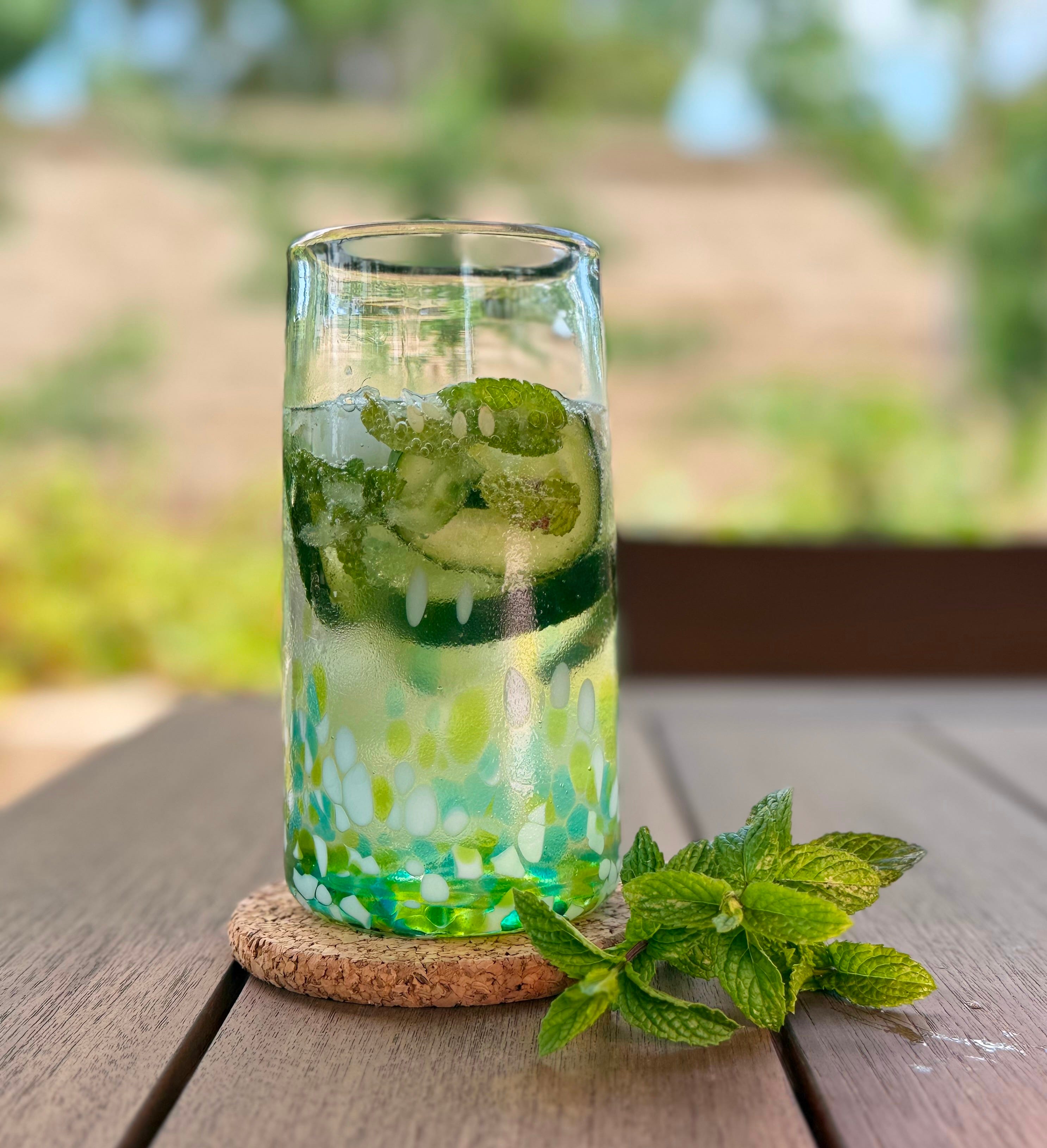
Mint-Cucumber Refresher
For this summer refresher, we were inspired by sekanjabin, a traditional Persian drink made with a mint-infused simple syrup with a vinegar splash for a sweet-tart minty flavor. The concentrated syrup is mixed with plain or sparkling water and topped with grated cucumber.
For this version, we chose sparkling water, and instead of grating the cucumber, we muddled it.
For the mint simple syrup
3 ounces water
1 cup sugar
2/3 cup lightly packed fresh mint leaves (about 8 large sprigs)
3 tablespoons apple cider
For the refresher
2 tablespoons mint simple syrup
4 thin slices cucumber, preferably Persian, unpeeled
4 small sprigs of fresh mint, divided use
12 ounces sparkling water
For the Mint Simple Syrup: Add the water and sugar to a small saucepan and place over medium heat and stir. When the sugar is dissolved, about 3 minutes, add the vinegar and stir. Boil for 5 minutes.
Remove from heat and add the mint leaves to the sugar syrup and stir. Cover and let steep for 30 minutes. Remove and discard the mint. Cool the syrup.
For the refresher: In a tall glass, add the cucumber slices and 2 mint sprigs and muddle to break down the cucumber. Add mint syrup and sparkling water. Stir and add ice cubes. Garnish with remaining mint sprigs.
What’s adding ☀️sunshine☀️ to our plates:
Meeting Adeena Sussman at a cookbook event for her new cookbook, “Zariz: 100 Easy, Breezy, Tel Aviv-y Recipes” (more to come in a future Sumac & Sunshine newsletter)
Mint and Sumac Lamb Kebabs from Kristin Faith Eats Substack newsletter.
Summer in a Bowl from Fraser Cooks Substack newsletter.
June is National Ice Tea Month. Celebrate by making some mint tea.
Thanks for your continued support by subscribing, reading, commenting and sharing Sumac & Sunshine!
Beth and Sarene (more about us in the welcome post)
P.S. Before you hop off, please consider tapping the ❤️, restacking the post and/or leaving a quick comment. It really helps our community :)
Superb piece, mint is my favourite herb especially fresh.