

Cool Tabbouleh for Hot Days
This bulgur-herb salad is the perfect choice for warm weather.

Thank the 1970s hippie and health food movements and our growing interest in global and vegetarian dishes for easing Middle Eastern tabbouleh into America’s mainstream consciousness. We were a little late to the party, as tabbouleh traces its roots back to the Middle Ages. Some theories suggest that people in the Levant ate a similar dish roughly 3,000 to 5,000 years ago.
Meet Tabbouleh: The herby salad is particularly popular in Lebanon, Syria and Palestine. The traditional Lebanese style may be most familiar with its abundance of parsley, some bulgur and seasoned with mint leaves, tomato and onion. It’s then tossed with just the right amount of lemony dressing. The result is refreshing, tangy, healthy and takes advantage of summer’s tomatoes.
When Sarene researched recipes that Sumac & Sunshine could make its own, she found oodles of variations. Using quinoa instead of bulgur? Check. Avocado or beets? Double check. Cinnamon, basil or cilantro? Yes, those too. Chef and restaurateur Michael Solomonov created grain-free Tabbouleh with Apples, Walnuts and Pomegranates (gift link) that’s on the New York Times’ website. Chef and restaurateur Yotam Ottolenghi uses pomegranate molasses and baharat in this tabbouleh recipe.
We interpreted this to mean that you can pretty much make tabbouleh with a creative catalog of ingredients and seasonings, as long as you keep the essence of the original.
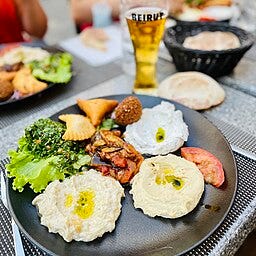
Fun Fact: Tabbouleh is Lebanon’s unofficial national dish. The National Tabbouleh Day Festival is annually celebrated on the first Saturday in July. (Think of this newsletter as a belated celebration.) Bristow, Oklahoma, holds its annual Tabouleh Fest on the second Saturday in May.
Deep Dive: “Tabbouleh” comes from the Arabic word tabbūlah, which is related to words meaning “seasoning” or “spice.” (It’s also spelled include tabouli, tabbouli, tabouleh, taboulah, and tabooley.)
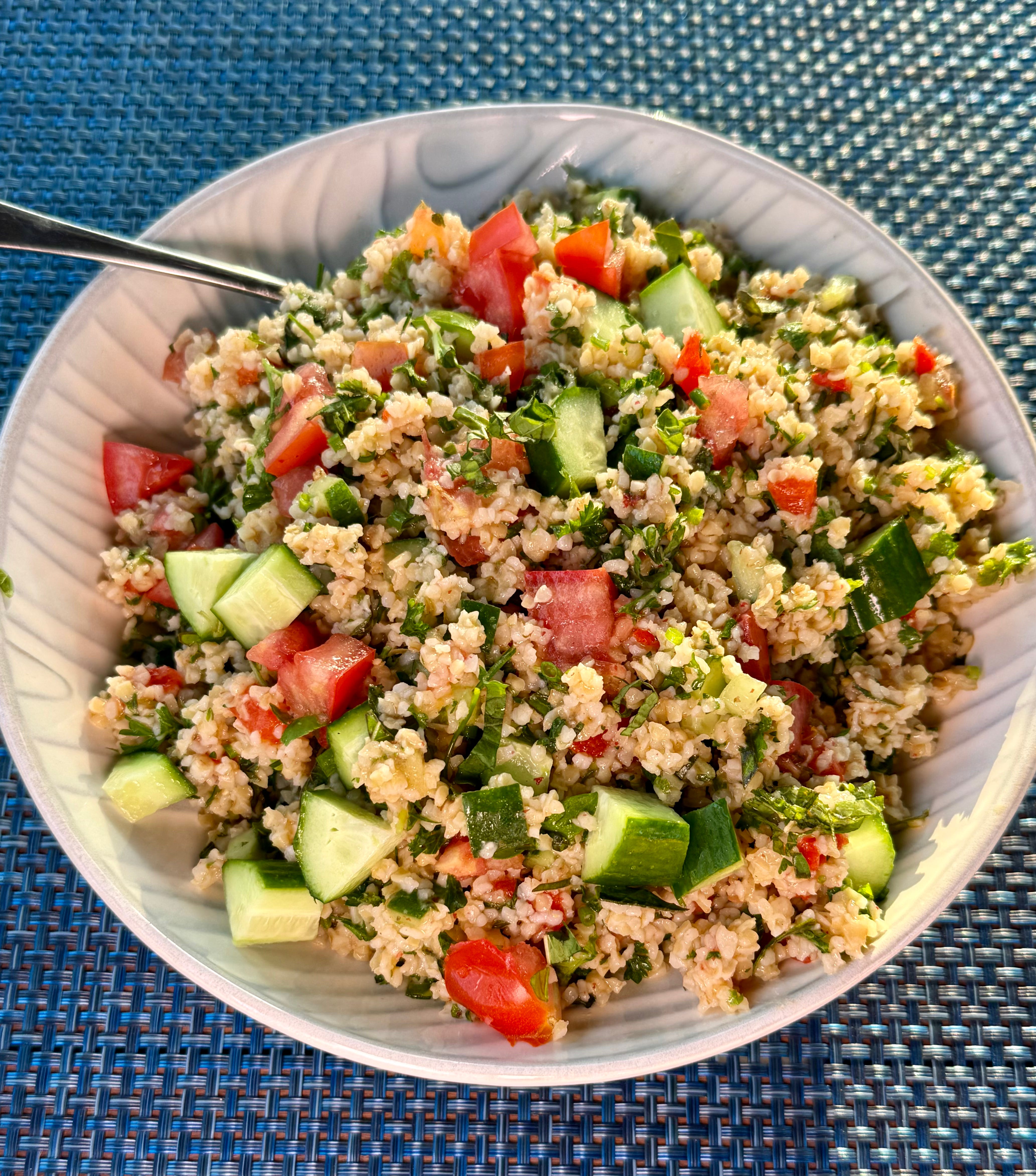
Tabbouleh
Seems there’s as many tabbouleh variations as there are grains of bulgur in every salad. So I (Sarene) felt liberated to create my recipe. You’ll recognize it as tabbouleh, but it balances the parsley with basil and mint for a more well-rounded herbiness (and because I’m not a huge fan of parsley). Cucumbers are a nod to Armenian tabbouleh. Preserved lemon brine and pink peppercorns (fruity and less sharp than black pepper) punch up the dressing. (You could substitute freshly ground black pepper, though.)
Serve the salad the traditional way, with Romaine lettuce leaves for scooping. Or alongside pita, solo or as part of a mezze platter. Top it with grilled chicken or salmon and add pita triangles for a healthy, hearty meal.
Makes 8 servings
2 cups uncooked bulgur wheat (labeled #2 and/or medium grind)
¾ cup medium-diced pieces (½-inch) red bell pepper
1½ cups medium-diced pieces (½-inch) tomato, preferably Roma or other meaty tomato variety
1½ cups medium-diced pieces (½-inch) Persian cucumber
1¾ cups chopped parsley, stems removed
¾ cup finely shredded basil leaves
⅓ cup finely shredded mint leaves
⅓ cup minced chives
Dressing
½ cup olive oil
⅔ cup fresh lemon juice
2½ tablespoons preserved lemon brine
2 tablespoons coarsely ground pink peppercorns
Add bulgur to a large bowl and stir in 4 cups of boiling water. Cover and set aside for 15 minutes. The bulgur should be tender. If not, soak for additional time. If needed, drain any water at the bottom of the bowl. Fluff the bulgur and set aside to cool.
To make the dressing, add all ingredients to a small bowl and whisk to combine.
Add red bell pepper, tomato, cucumber, parsley, basil, mint and chives; gently toss to mix. Pour dressing over the bulgur mixture and toss to coat. You may not need all the dressing.
Served chilled.
What’s adding ☀️sunshine☀️ to our plates:
“Boustany: A celebration of vegetables from my Palestine” by Sami Tamimi. Comes out July 15.
“Zahav: A World of Israeli Cooking” by Michael Solomonov. This classic we turn to again and again is celebrating its 10th anniversary this year.
We have tomatoes on the brain as our garden pumps out ‘maters. Here’s a recipe to use some of them: A Perfect Panzanella With Loads of Tomatoes - No. 348 Anne Byrn: Between the Layers on Substack.
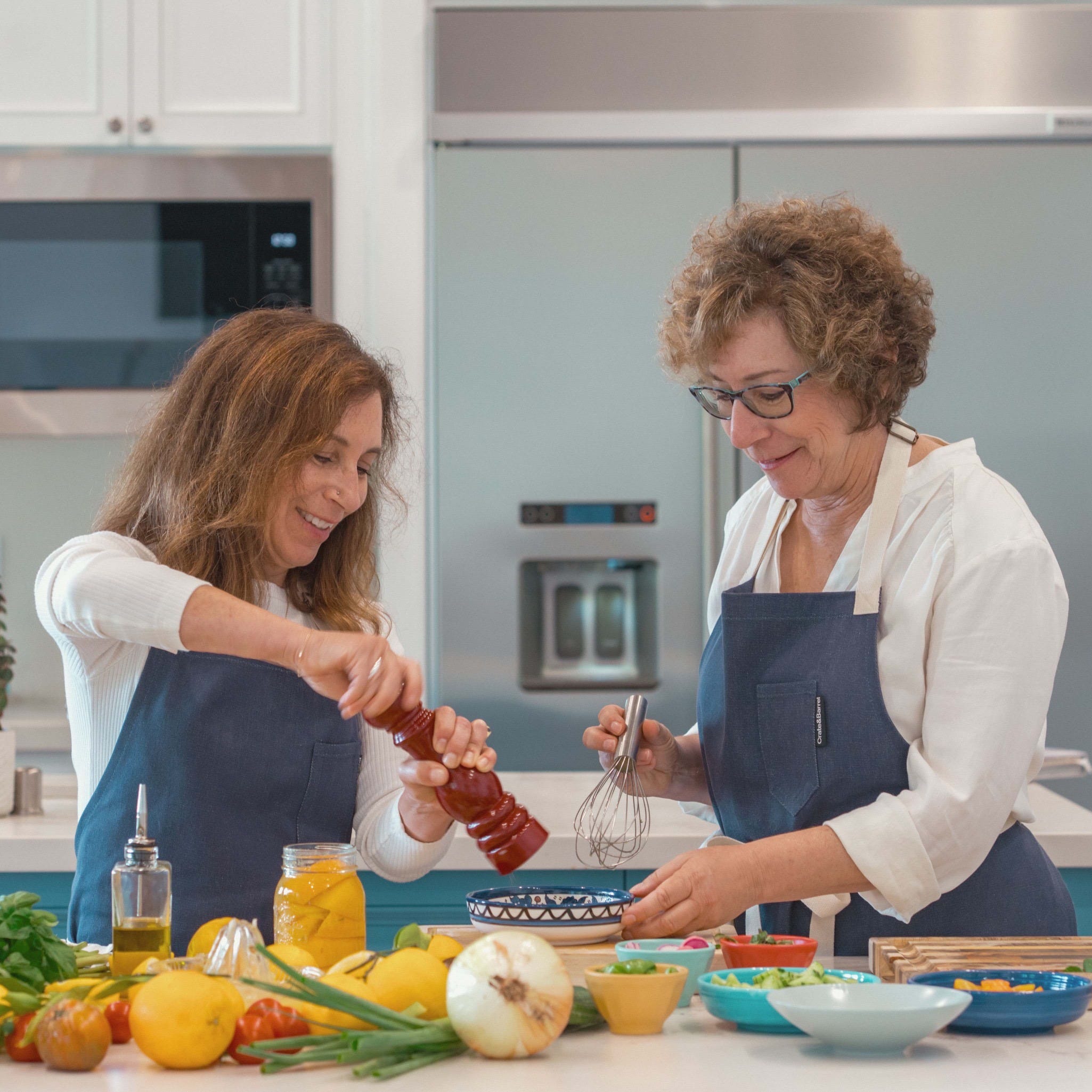
Thanks for your continued support by subscribing, reading, commenting and sharing Sumac & Sunshine!
Beth and Sarene (more about us in the welcome post)
Mezze photo: Tatakdh, CC BY-SA 4.0 <https://creativecommons.org/licenses/by-sa/4.0>, via Wikimedia Commons
Beautiful! Interesting that your dressing has more lemon juice than olive oil.
There's also kisir, the popular Turkish version, spicier than classic Lebanese tabbouleh, with Turkish pepper paste and cumin. Almost every time I go to a Turkish pot-luck, someone makes it.
Here's my recipe, aa published in the Los Angeles Times: https://www.latimes.com/recipe/spicy-bulgur-salad-with-sweet-peppers-and-pepper-paste
I can’t forget the first time I made it at home because my cousin who never cooks helped me with the parsley!! And I believe the recipe was from Jerusalem and it uses Baharat.